 Free CAD before you commit
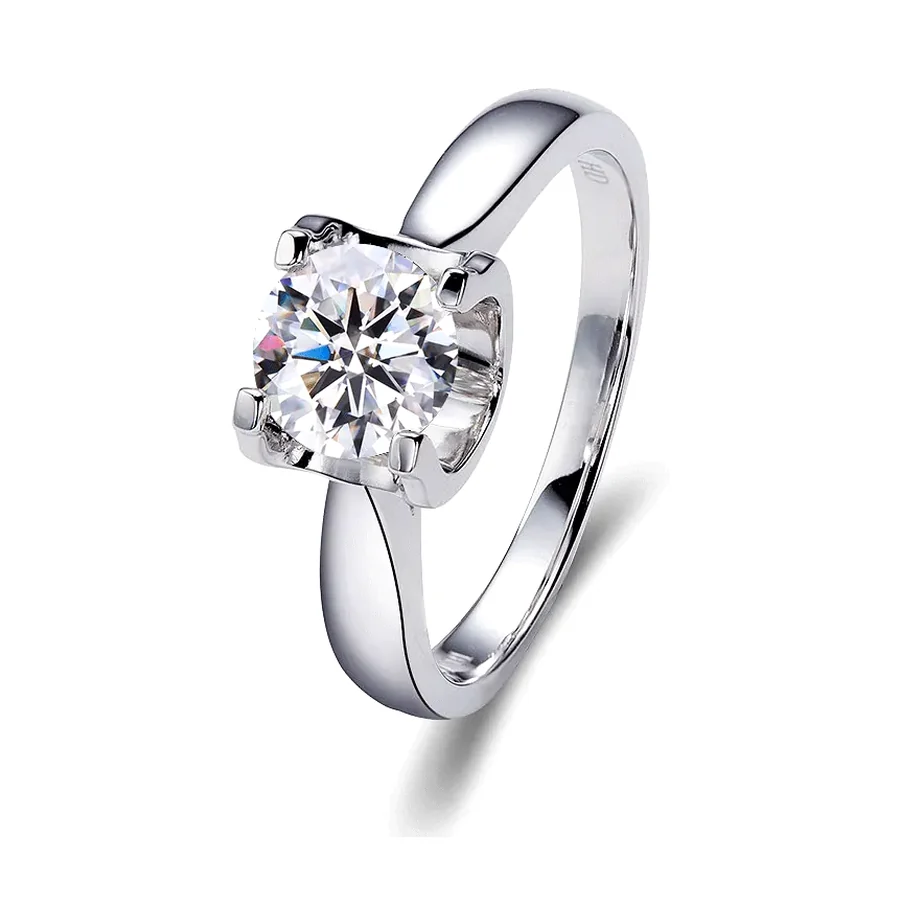 222 engagement designs
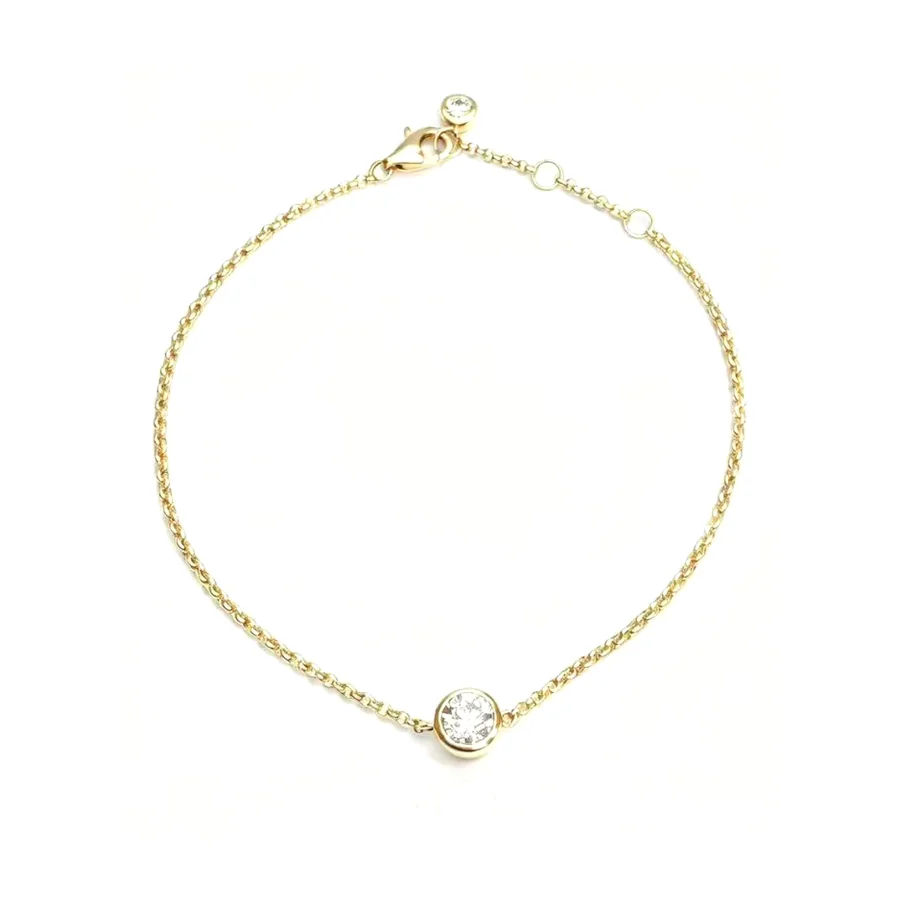 269 necklaces & pendants
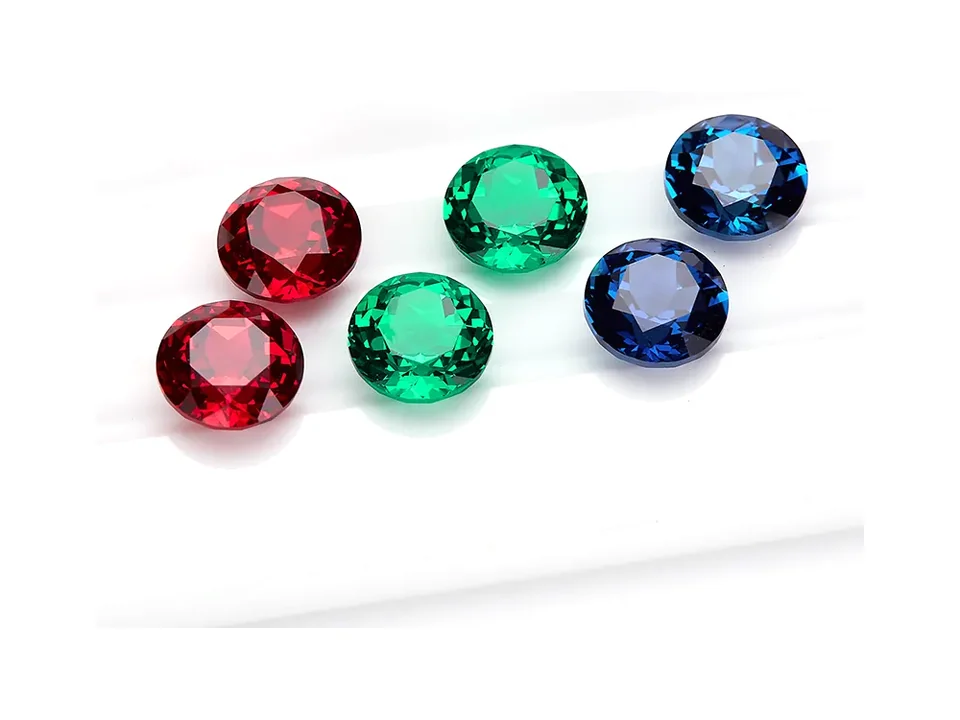 Matched pairs from stock
 18 years under one roof
Guide · Stones
Moissanite vs Lab-Grown Diamond
Both are affordable. They do not look the same, and they do not age the same.
Updated November 2026 · Holycome Custom Jewelry
This is the question we answer most often, and the honest answer is that it depends on what you want to look at. Both stones are durable, both are affordable compared with mined diamonds, and they behave differently in daylight.
The physics, briefly
Lab-grown diamond: hardness 10, refractive index 2.42, dispersive fire moderate. It is a diamond, grown from carbon in a reactor, with the same crystal structure as a mined one.
Moissanite: silicon carbide, hardness 9.25, refractive index 2.65–2.69, fire very high. It splits light into spectral color more aggressively than diamond — that is the "rainbow" people either love or find too much.
How they look in person
A well-cut moissanite in a 6.5 mm round looks brighter and more colorful than a diamond of the same size. Under spotlights it is spectacular; in flat office light it can look slightly glassy. A diamond is quieter — it returns white light rather than splitting it.
If you want a stone that reads as "diamond" to a jeweller across a counter, choose lab-grown diamond. If you want maximum sparkle for the budget, moissanite wins comfortably.
How they age
Both resist scratching from daily wear. Moissanite can develop surface scuffs against hard materials and holds a slight oil film more readily, so it needs cleaning more often to stay bright. Diamonds attract grease even more, which is why a diamond ring looks dull after a week and a wash brings it back.
Neither clouds. CZ does — that is the material people confuse with moissanite, and it is why a suspiciously cheap "moissanite" ring looks milky after two years.
Price, honestly
Moissanite is a fraction of the price of a lab-grown diamond of the same millimeter size. The gap is largest at 1 ct and above. If budget is fixed and size matters, moissanite lets you go bigger; if provenance and "it is a diamond" matter, the premium buys that.
Certificates
Moissanite ships with a GRA card stating measurements and grade. Lab-grown diamonds can be supplied with an IGI report. A certificate is not a quality guarantee — it is a description. Read the measurements, not just the grade.
Which one we recommend
- Engagement ring, everyday wear, budget under $1,000: moissanite in 14K. Excellent value, spectacular in photographs.
- Engagement ring where the stone is the point: lab-grown diamond, IGI-certified, VS or better.
- Earrings and tennis bracelets: moissanite, because many small stones multiply the price difference.
- Heirloom replacement: match the original. If the original was diamond, a lab diamond keeps the piece consistent.