 Free CAD before you commit
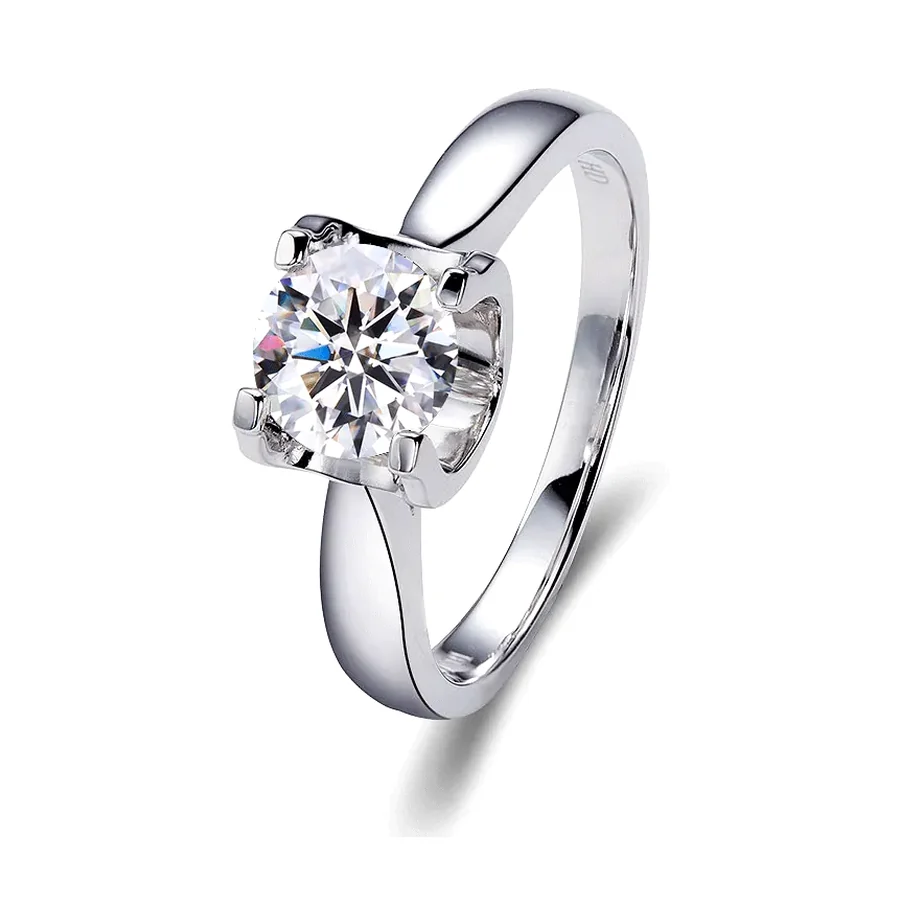 222 engagement designs
 269 necklaces & pendants
 Matched pairs from stock
 18 years under one roof
Guide · Design
Matching a Wedding Band to an Engagement Ring
Why the gap appears, and the four ways to close it.
Updated November 2026 · Holycome Custom Jewelry
Almost every engagement ring with a raised head has the same problem: a straight wedding band will not sit against it. There is a gap, and the gap is visible from the side. There are four ways to solve it, and one way to avoid the problem entirely.
1. Contoured (curved) band
The band is shaped to follow the basket of the engagement ring. It sits flush and looks intentional. The downside: the contour is cut for a specific head height, so if the engagement ring changes, the band no longer fits. We cut contours from a profile photograph or, better, from the CAD file if we made the ring.
2. Notched band
A small notch is cut into a straight band where the head sits. It keeps the clean straight line and closes most of the gap. Better for wide bands where a full contour would look bulky.
3. Open or gap band
The band is made with an opening that lets it sit around the head. Popular with low-set bezels. It must be engineered so the opening does not catch on clothing — a chamfered inner edge solves most of it.
4. A spacer
A thin plain band worn between the two rings prevents metal-on-metal wear, which is real: diamonds in a pavé band will slowly abrade the engagement ring’s shank. A 1.2 mm spacer in the same metal is cheap insurance. Many of our clients end up wearing three rings for this reason alone.
The way to avoid it
Buy the wedding band at the same time as the engagement ring, and have both designed together. We do this often: the two bands are profiled against each other, cast from the same alloy batch, and finished with the same surface. It is the only approach that guarantees a flush fit and matching color years later.
Metal matching
White gold and platinum next to each other look slightly different — platinum is grayer and duller, white gold is brighter because of rhodium. If you want a matched set, use the same metal. If you are mixing on purpose, put the plain band in platinum and the diamond band in white gold, which is what most jewellers do.
Width balance
A 2 mm engagement ring next to a 4 mm band looks unbalanced from above. A useful rule: the wedding band should be within 0.5 mm of the engagement ring’s shank, or at least 1.5 mm wider if you want a deliberate contrast. Nothing in between.